Meditation, Qigong, and the
Medical Use of Relaxation
“Try to relax” is common advice, but it is rarely very useful. A person experiencing pain, anxiety, insomnia, or the stress of serious illness cannot always become calm simply by deciding to do so. Relaxation is not a switch that can be turned on at will.
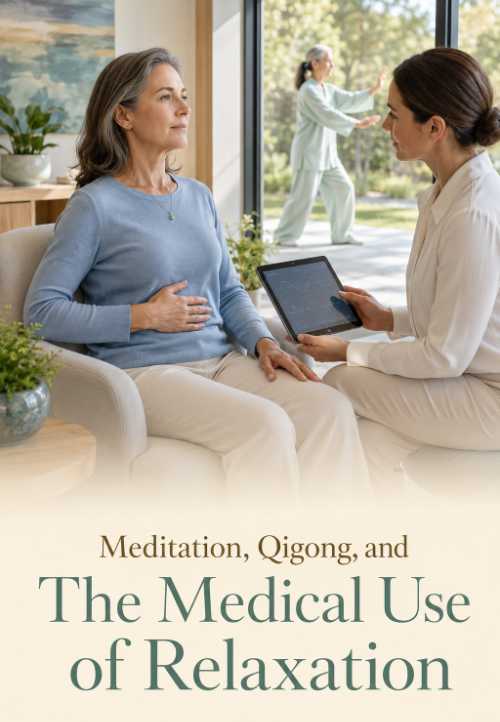 Meditation and qigong offer methods for practicing relaxation as a skill. They use attention, breathing, posture, and repeated experience to help the body and mind settle. This has led to growing interest in their use alongside conventional medical care.
Relaxation does not mean becoming limp, passive, or unaware. In meditation, the body may remain still while attention is directed toward breathing, bodily sensations, a sound, or the activity of the mind. The purpose is not necessarily to stop all thoughts. It may simply be to notice them without being carried away by each one.
Qigong introduces gentle movement. Postures, breathing, and attention are coordinated through repeated exercises. Some practices are quiet and meditative, while others involve stretching, stepping, or more vigorous movement. The practitioner learns to reduce unnecessary tension while maintaining comfortable structure and awareness.
This is sometimes described as “active relaxation.” A person is not collapsing or withdrawing from activity. The body remains engaged, but effort is used more efficiently.
From a medical perspective, relaxation practices may help influence the stress response. Under stress, breathing and heart rate may increase, muscles tighten, and attention narrows toward a perceived threat. These reactions are useful in an emergency, but they can become exhausting when repeatedly activated by chronic pain, worry, poor sleep, or prolonged illness.
Structured relaxation can encourage slower breathing, reduced muscular tension, and a calmer state of attention. Research suggests that meditation and mindfulness may help some people manage stress, anxiety, depression, pain, and sleep difficulties, although results vary by condition and study. Research on qigong is less extensive, but some studies report possible benefits for fatigue, sleep, physical function, and quality of life.
These practices do not need to cure a disease to have medical value. A person undergoing treatment may still benefit from sleeping more comfortably, feeling less overwhelmed, or recovering a sense of participation in daily life. Someone with chronic pain may not eliminate the pain but may become less tense in response to it, move more freely, and experience fewer disruptions.
At the same time, relaxation should not be used to explain every illness. Patients should not be told that they became sick because they failed to manage stress or maintain a positive attitude. Stress can affect health, but it is only one influence among genetics, infection, injury, environment, behavior, and many other factors.
Meditation and qigong are generally considered low-risk, but they are not appropriate in exactly the same form for everyone. Extended or intensive meditation can occasionally increase anxiety or emotional distress. Qigong movements may need adaptation for balance problems, pain, recent surgery, or physical limitations. Qualified instruction and communication with healthcare providers are especially important when a serious condition is present.
Within complementary care, relaxation is not a replacement for diagnosis, medication, psychotherapy, rehabilitation, or other needed treatment. It is another way of supporting the person receiving that treatment.
Medicine often acts upon the body through procedures and prescriptions. Meditation and qigong give patients something they can practice for themselves. Their value may lie not only in becoming calmer, but in developing a more skillful relationship with breathing, movement, attention, and the unavoidable stresses of life.
Sources: NCCIH: Relaxation Techniques, NCCIH: Meditation and Mindfulness, NCCIH: Qigong.