Can Food Be Both Nutrition and Medicine?
Food is usually discussed in two very different ways. Nutrition describes proteins, fats, carbohydrates, vitamins, minerals, and calories. Medicine describes treatments intended to prevent, manage, or cure disease. Yet the boundary between the two is not always as clear as it appears.
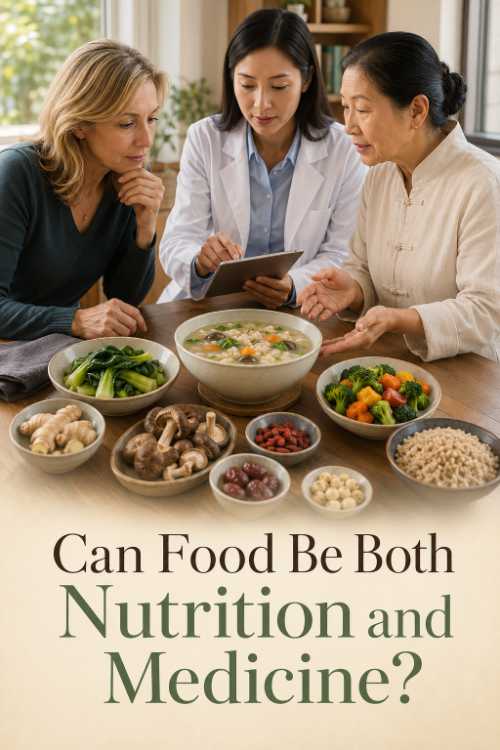 Food provides the materials the body needs to function, repair tissue, produce energy, and maintain health. What we eat regularly can also influence blood sugar, blood pressure, digestion, body weight, and other aspects of health. For someone with diabetes, kidney disease, food allergies, or celiac disease, dietary choices may become a necessary part of medical care.
This is one reason the phrase “food as medicine” has gained attention. It reminds us that nutrition is not separate from health and that dietary guidance can sometimes be therapeutic. A medically tailored meal or carefully planned diet may support recovery, reduce symptoms, or help manage a chronic condition.
Traditional Chinese medicine has long recognized a close relationship between food and medicine. The expression yàoshí tóngyuán (药食同源) means that medicine and food share the same source. Many familiar ingredients, including ginger, Chinese dates, cinnamon, mint, and various seeds, appear in both cooking and traditional remedies.
Chinese dietary therapy does not usually judge a food only by its nutrients. Foods are also described according to qualities such as warming, cooling, moistening, or drying, together with their traditional relationships to particular organs and patterns. A meal considered appropriate for one person or season may be less suitable for another.
This differs from modern nutritional science, which studies food through measurable substances and biological effects. The two approaches do not always use compatible explanations, but both recognize that the effect of a diet depends partly on the person eating it. Age, activity, medical condition, digestion, culture, climate, and access to food all matter.
Calling food medicine, however, can easily become an exaggeration. A bowl of soup may be comforting and nourishing, but it is not an antibiotic. A particular vegetable may be associated with health benefits without treating cancer. No single “superfood” can correct an otherwise poor diet or replace appropriate medical care.
Dose and preparation matter as well. Eating an herb as a culinary ingredient is not necessarily equivalent to taking a concentrated extract or medicinal formula. A substance that is gentle in food quantities may have stronger effects, side effects, or medication interactions when consumed in a highly concentrated product.
Food also has purposes beyond preventing disease. It provides pleasure, hospitality, family connection, and cultural continuity. Turning every meal into a medical calculation can create anxiety and make eating unnecessarily restrictive. A healthful diet should still be practical, satisfying, and suited to the person’s life.
Within complementary care, nutrition and Chinese dietary therapy may offer useful ways to support treatment. A physician can identify conditions that require specific dietary changes. A registered dietitian can help create a nutritionally adequate plan. A qualified Chinese medicine practitioner may contribute traditional observations about digestion, constitution, and seasonal adjustment. Ideally, these perspectives should communicate rather than work in isolation.
Food can therefore be both nutrition and medicine, but not because every ingredient is a drug. Its therapeutic power is usually gradual, cumulative, and closely tied to individual needs. Food may not replace medicine, but it helps create the daily conditions in which medicine, recovery, and health must operate.
Source: U.S. Department of Health and Human Services: Nutrition in America.