Winter Vegetable Hot Pot
Sù Huǒguō (素火锅)
Ho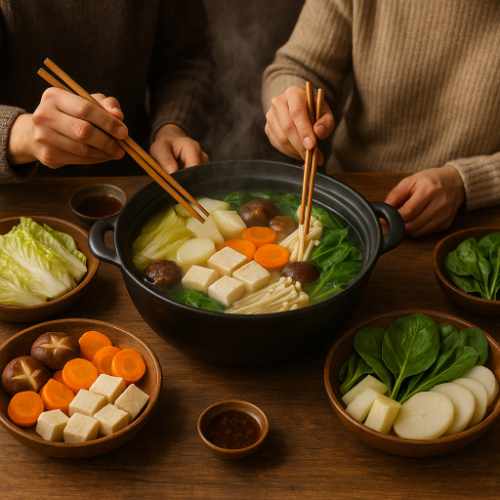 t pot is one of China’s oldest and most beloved winter traditions—a communal meal designed to gather warmth, family, and friendship around a single bubbling pot. Its origins stretch back more than a thousand years, with variations found from Chongqing’s fiery broths to the milder copper pots used in northern China.A plant-based winter hot pot is fully authentic: historically, many households relied heavily on winter vegetables, tofu, mushrooms, and preserved ingredients during the cold season. At its heart, hot pot is less about extravagance and more about shared warmth, steady cooking, and the pleasure of dipping simple foods into fragrant broth.
What makes this dish worth learning? Hot pot teaches the principles of communal cooking, warming spices, and layered broth building. It introduces readers to a foundational Chinese winter practice while remaining extremely adaptable. Learning a vegetable-based hot pot provides a template for dozens of future variations, from mild herbal broths to heartier mushroom stews.
Ingredients: (Serves 2–3)
For the Broth:
- 6 cups water or light vegetable broth
- 3–4 slices fresh ginger
- 1–2 cloves garlic, lightly crushed
- 1 piece dried shiitake (optional)
- 1 small piece kombu (optional, for umami)
- Salt or light soy sauce to taste
Vegetables & Add-ins (choose any):
- Napa cabbage, leaves separated
- Spinach or bok choy
- Sliced daikon or winter radish
- Carrot slices
- Tofu cubes or tofu skin rolls
- Fresh mushrooms (shiitake, enoki, oyster)
- Sliced lotus root (optional)
- Glass noodles or rice noodles
Accessibility note: All ingredients are fully substitutable—use whatever winter vegetables you can find locally.
Instructions:
Prepare a wide pot or tabletop hot pot setup. Add water or broth along with ginger, garlic, and optional dried shiitake or kombu. Bring to a gentle boil, then reduce to a simmer for 10–15 minutes to allow the aromatics to infuse.
Arrange the vegetables, tofu, and noodles on a platter.
Season the broth lightly with salt or soy sauce. Keep it gently simmering.
At the table, diners add vegetables and tofu into the hot pot, cooking them to their preferred tenderness. Serve with a simple dipping sauce such as light soy sauce with a few drops of sesame oil or a pinch of chili.
Substitutions and Variations:
If kombu is unavailable, simply rely on mushrooms.
For a warm, fragrant broth, add one star anise or a small piece of cinnamon.
For readers who prefer a Sichuan flavor, a spoon of chili bean paste may be incorporated into a second, spicier section of the pot.
Health and Culinary Notes:
In TCM thought, winter eating emphasizes warming, circulating, and preserving Qi. Hot pot—especially with ginger and lightly cooked greens—warms the yang and supports digestion. Mushrooms provide grounding energy, dòufu (tofu) offers clean nourishment, and leafy vegetables gently regulate fluids. Because diners cook each bite fresh, the meal feels both hearty and light, making it a classic choice for deep winter gatherings.