Can Taijiquan or Qigong Change Your Life?
People sometimes describe beginning Tàijíquán (太極拳) or qìgōng (氣功) as a life-changing experience. Such statements can sound exaggerated, particularly when these practices are promoted with promises of remarkable healing or spiritual transformation. Yet sustained practice can change a person’s life, although usually through gradual improvements rather than a sudden revelation.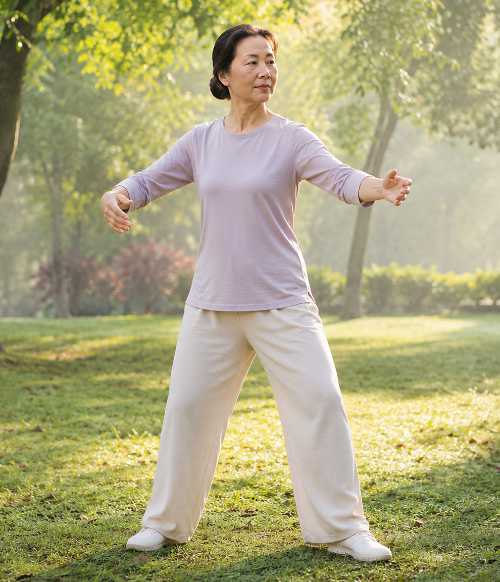
The first changes are often physical. Taijiquan and qigong encourage controlled movement, upright posture, coordinated breathing, and careful shifting of body weight. With regular practice, people may improve their balance, leg strength, flexibility, mobility, and general confidence in movement. Research has found particularly consistent evidence that taijiquan can improve balance and help reduce the risk of falls among older adults.[1]
These benefits may appear modest when measured individually, but their practical effect can be substantial. A person who feels steadier may become more willing to walk outdoors, travel, garden, climb stairs, or participate in social activities. Reduced fear of falling can restore a degree of independence that extends well beyond the practice session.
Taijiquan and qigong may also change how people experience their bodies. During practice, students learn to notice where they hold unnecessary tension, how their weight is distributed, whether their breathing has become restricted, and how posture affects movement. This increased awareness can carry into ordinary activities such as standing, walking, lifting, or sitting at a desk.
The psychological effects are often quieter but equally important. Slow, attentive movement requires a person to return repeatedly to the present task. Thoughts may continue, but attention is directed toward breathing, alignment, balance, and coordination. Systematic reviews suggest that taijiquan and qigong may help reduce perceived stress, anxiety, and depressive symptoms, although the quality and design of studies vary.[2][3] These practices should not be treated as replacements for necessary medical or psychological care, but they may serve as useful complementary activities.
Practice can also change a person’s relationship with aging. Many forms of exercise are judged by speed, power, distance, or competitive achievement. Taijiquan and qigong allow meaningful refinement even when athletic capacity begins to decline. An older practitioner may lose speed while gaining sensitivity, coordination, efficiency, and a clearer understanding of movement. Aging is no longer viewed entirely as deterioration. It can also become a period of continued study.
The class environment may contribute to these changes. A good group provides regular social contact, shared effort, and a community that is not necessarily based on occupation, income, or age. Research involving taijiquan participants has found that relaxation, self-confidence, social support, and a growing sense of self-efficacy may all contribute to the perceived benefits of practice.[4]
For some students, movement principles eventually become life principles. Yielding does not always mean surrendering. Softness is not the same as weakness. Stability does not require rigidity. Difficult situations may be handled by adjusting, redirecting, or waiting for a more appropriate moment. These ideas begin as physical instructions, but they can influence how practitioners respond to conflict, illness, frustration, and change.
None of this happens automatically. Attending a few classes may provide pleasant exercise without producing a lasting transformation. Poor instruction may encourage strained postures, empty choreography, or unrealistic claims about mysterious abilities. Long practice also does not guarantee wisdom, humility, or good character.
When these arts do change a life, they usually do so through accumulation. Thousands of small corrections gradually influence posture, attention, habits, confidence, and one’s response to aging. The transformation may not be dramatic enough to notice from one day to the next. After several years, however, the practitioner may recognize that the practice has become more than an activity. It has become one of the ways life is experienced and understood.
References
- National Center for Complementary and Integrative Health. “Tai Chi: What You Need to Know.” https://www.nccih.nih.gov/health/tai-chi-what-you-need-to-know
- Kraft, J., et al. “Stress Reduction Through Taiji: A Systematic Review and Meta-Analysis.” BMC Complementary Medicine and Therapies, 2024. https://pmc.ncbi.nlm.nih.gov/articles/PMC11149313/
- Wang, C. W., et al. “Managing Stress and Anxiety Through Qigong Exercise in Healthy Adults: A Systematic Review and Meta-Analysis of Randomized Controlled Trials.” BMC Complementary and Alternative Medicine, 2014. https://pmc.ncbi.nlm.nih.gov/articles/PMC3893407/
- Yeh, G. Y., et al. “The Impact of Tai Chi Exercise on Self-Efficacy, Social Support, and Empowerment in Heart Failure.” American Journal of Chinese Medicine, 2016. https://pmc.ncbi.nlm.nih.gov/articles/PMC4866692/
- National Center for Complementary and Integrative Health. “Qigong: What You Need to Know.” https://www.nccih.nih.gov/health/qigong-what-you-need-to-know
2026 Qi Journal