Acupuncture for Pain: Where Does It Fit?
Pain is one of the most common reasons people seek acupuncture. Back pain, neck pain, headaches, arthritis, and other persistent conditions can interfere with sleep, movement, work, and emotional well-being. When ordinary treatment provides incomplete relief or causes unwanted effects, acupuncture may offer another useful option.
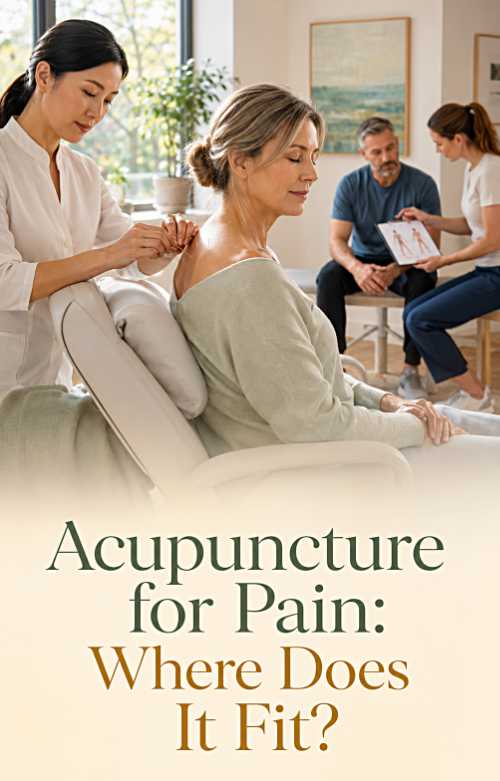 Yet describing acupuncture only as a treatment for pain gives a limited picture of its traditional role. Within Chinese medicine, acupuncture is not simply a procedure performed on the painful area. It is part of a larger system that considers how symptoms relate to the person’s overall condition.
A traditional consultation may include questions about sleep, digestion, energy, appetite, emotional stress, temperature preferences, and other changes that seem unrelated to the primary complaint. The practitioner may also examine the tongue and pulse. Treatment is then selected according to a Chinese medical pattern, not only the Western diagnosis.
Two patients with knee pain, for example, may not receive identical treatments. One person’s pain may be aggravated by cold weather, while another experiences swelling and warmth. A third may have pain associated with an old injury and restricted movement. Local points near the knee may be used, but other points may be chosen to address the broader pattern.
From a modern research perspective, acupuncture has been studied most extensively for pain. The National Center for Complementary and Integrative Health reports that it may be helpful for several conditions, including back or neck pain, knee pain associated with osteoarthritis, postoperative pain, and certain headaches. Benefits are often modest when averaged across large groups, but even modest relief can matter to someone living with persistent discomfort.
Acupuncture fits especially well within a broader plan. A patient with back pain might also need medical evaluation, appropriate exercise, physical therapy, changes in working posture, or treatment for an underlying condition. Acupuncture may help reduce pain enough for the person to move more comfortably, sleep better, or participate more fully in rehabilitation. It does not have to replace the other parts of care to be worthwhile.
Traditional practitioners also use acupuncture for concerns beyond pain, including digestive complaints, stress-related symptoms, sleep difficulties, menstrual discomfort, and general well-being. Scientific support varies considerably depending on the condition. Some uses have encouraging evidence, while others remain uncertain or have not been studied adequately. Traditional use can guide research, but it should not be mistaken for proof that every claimed benefit has been established.
Safety also depends upon how acupuncture is practiced. It is generally considered safe when performed by a properly trained practitioner using sterile, single-use needles. Serious complications are rare, but improper needling can cause infections or injury. Patients should mention pregnancy, bleeding disorders, implanted medical devices, medications, and significant health conditions before treatment.
Acupuncture should not be used to postpone evaluation of severe, sudden, or unexplained symptoms. Pain can be the body’s warning that something requires medical attention. Relieving the warning is not the same as identifying its cause.
The most useful question is therefore not whether acupuncture belongs to Eastern or Western medicine. It is whether it can contribute safely and meaningfully to this person’s care. Sometimes its role is to reduce pain. Sometimes it supports sleep, movement, relaxation, or recovery. Within Chinese medicine, it may also be one part of a broader effort to understand and improve the person’s overall pattern of health.
That is where acupuncture fits best: not as a competitor to other forms of care, but as a potential partner within a thoughtful and coordinated approach.
Sources: National Center for Complementary and Integrative Health: Acupuncture Effectiveness and Safety, World Health Organization: Benchmarks for the Practice of Acupuncture.